
15 Therapist Recommended Books For Personal & Relationship Healing

Want homework? Many clients ask if there are books that can help them better understand their emotions, relationships, and patterns outside of therapy. This page includes some of the titles I most often recommend, on topics like relationships, boundaries, trauma, neurodiversity, sex, and personal identity exploration. Please note that I do not receive any financial incentives to include books in my recommendations here or during sessions.
On Love & Relationships

All About Love: New Visions by bell hooks
Why I Recommend: This is a thoughtful, contemplative book written for everyone. It helps us to examine our perspectives of love and social influences on why/how/when we feel- and live- it. I root my practice in bell hooks' definition of love.
Clients Like: The prose, the gentle invitation to truly evaluate and reframe your perspectives, the instillation of belief that you do deserve to be treated well in all of your relationships, and the hope that love, as both an action and a feeling, is accessible to us all.

The Body is Not an Apology: The Power of Radical Self-Love by Sonya Renee Taylor
Why I Recommend: Many social factors want us to believe that we are not good 'enough', not valuable, not beautiful, and now powerful. Sonya Renee Taylor's book challenges these factors, providing opportunities to reconnect with and build positive, healthy relationships with our Selves.
Clients Like: The comfort provided by the text, the calming nature of the prose, the guided prompts to ease into reframing your self-conception and self-talk, and the opportunity to challenge oppression in our culture.

Prodependence: Beyond the Myth of Codependency (revised edition) by Dr. Rob Weiss
Why I Recommend: The reframing of codependency into something that works to erase the shame attached to loving someone who is struggling with their life is a powerful factor in healing and evolving your way-of-being in relationships. This book is oriented towards both clients and clinicians, providing a new path towards de-pathologizing love when someone is in relationship with someone navigating addiction.
Clients Like: The de-shaming language & framing of their expression of love and emotions, the 'calling in' of clinicians in the mental health field to change their perspectives of relationships, clear differentiation between abusive relationships and an interdependent dysfunction, and the clear FAQ section.
On Neurodiversity

The Autism Relationships Handbook: How to Thrive in Friendships, Dating, and Love by Joe Biel & Dr. Faith G. Harper
Why I Recommend: Co-written by an autist and clinician, this book provides a consumable starting ground to navigate aspects of relationships, both with oneself and other people, in a direct, concrete, and inclusive way. It is by no means perfect advice for every autistic person in every situation, but/and it is a great starting point for lots of folks- particularly late-diagnosed adults who want to take a look, through a new lens, at their relationships over time.
Clients Like: Validation of trauma around relationships that oft accompanies neurodiversity, straightforward content information, focus on relational safety for all partners in relationships regardless of type, attention to strengths of autism.

The Autism Partner Handbook: How to Love an Autistic Person by Joe Biel, Elly Blue, & Dr. Faith G. Harper
Why I Recommend: Co-written by an autist, his allistic wife, and a clinician, this book provides a look into the window of the different experiences and perspectives that may exist in an autistic-allistic relationship. It focuses on helping an allistic partner begin to understand autism as a way-of-being and provides tips, tricks, and information about building and maintaining healthy and safe relationship(s) that meet everyone's diverse needs. Again, not a perfect fit for every person in every autistic-allistic relationship, but/and a wonderful starting point for many.
Clients Like: The ease of reading, getting information from a couple who is succeeding in their relationship, content information on what an autist's experience is like, and attention to safety in both the relationship and the neurophobic world.

Driven to Distraction by Dr. Edward M. Hallowell & Dr. John Ratey
Why I Recommend: If you want to get a solid grasp of the affects of ADD and ADHD, as well as evolving research on this form of neurodiversity over time, this is your book. It provides information on strengths/skills, coping tool ideas, treatment options, common myths, and tips for loving and living with an ADD/ADHD-brained person.
Clients Like: The decrease in shame and confusion, particularly around late-diagnosed ADHD/ADD, ideas for managing symptoms, and decreasing stigmatization.

Delivered from Distraction by Dr. Edward M. Hallowell & Dr. John Ratey
Why I Recommend: This book compiles answers to the "why" and "how" of many aspects of ADD/ADHD, including attention to genetic factors, links to other disorders/diagnoses, medication, strengths/talents, non-pharmaceutical treatments, sex, and strategies to mitigate common problems influenced by ADD/ADHD symptoms.
Clients Like: answers and tools related to specific questions/topic areas in this book, non-pharmaceutical treatment ideas, and strong, evidence-based information to clarify misinformation from social media.

Love, Sex, & Autism: The Radical Truth about Intimacy and Neurodifference by Candace Christensen
Why I Recommend: This book dispels so many myths about autism and sex/sexuality while providing real information through stories, clinical insight, and workable intimacy-focused actions to take for oneself in and out of relationships. The author has both lived experience as an autistic and ADHD woman and clinical expertise as a sex and neurodiversity specialist.
Clients Like: The validation of the difference while equally valued sexual and intimate experience, attention to sensory, communication, and emotional differences between autistic and allistic folks both inside and outside the bedroom, and the education that the text provides allistic partners so they don't have to.
On Sex & Sexuality

Come As You Are: The Surprising New Science That Will Transform Your Sex Life by Dr. Emily Nagoski
Why I Recommend: This is the sex education I wish we could have in schools. If you added in biological information that is typically provided in (decent) current sex education curriculums, it would provide a solid education. The room for improvement is in terms of LGBQIA2S+ sex, and survivors of sexual assault and abuse should take caution as some of the information or phrasing could trigger a trauma response.
Clients Like: A lot of new information, validation of normalcy of sexual feelings/frequency of sex/sexual experiences, decrease in shame, and their increase in self-awareness.
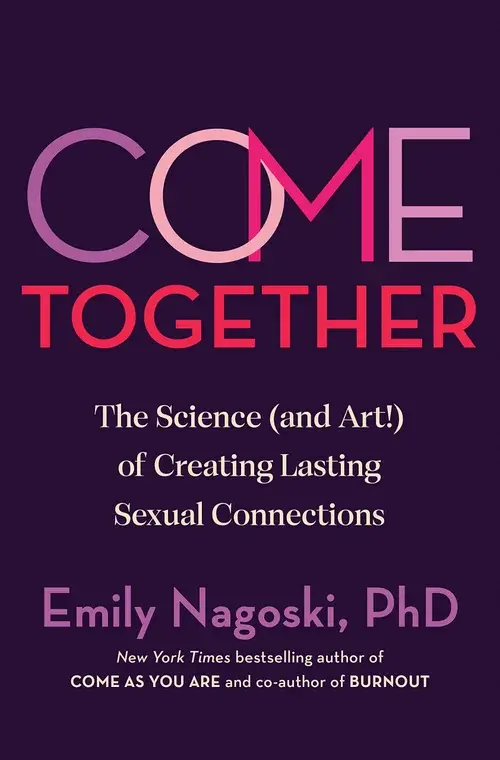
Come Together: The Science (and Art!) of Creating Lasting Sexual Connections by Dr. Emily Nagoski
Why I Recommend: Once you've had the sex education of Come As You Are, Come Together is a fantastic read for anyone in a long-term relationship who wants an enjoyable, connected sex life with their partner(s). It contains evidence-based and relational info about what great sex can be, how to obtain it, and how to navigate struggles in the process.
Clients Like: The humor balanced with scientific rigor, the realistic tips and helpful advice about navigating struggles, the hope instillation that one can and should enjoy their sex life for as long as they and their partner(s) want to, and the steps away from patriarchal standards and definitions of a good sex life.

What Turns You On? A Guide to Living Your Best Sex Life by Dr. Alexandra Katehakis
Why I Recommend: One of the few workbooks on this list, What Turns You On? provides a fantastic structure for self-exploration about your perceptions, interests, desires, and other sexual ways-of-being. It's appropriate for all genders and sexual orientations, and both teens developing healthy individual sexual exploration and adults challenging themselves to break down social influences to determine their own desires.
Clients Like: The workbook formatting, variety of exploration structures like journal prompts, somatic work, and creative expressions, taking the workbook one day at a time, and the normalization of a wide variety of sexual interests.
On Trauma

The Adult Children of Emotionally Immature Parents by Dr. Lindsay C. Gibson
Why I Recommend: For those of us who were raised by emotionally immature adults, our parents and caregivers may have contributed to our own emotional immaturity and relationship management issues. This book provides information to consider one's upbringing in terms of relationships as well as experiences, and helps folks to connect their childhood influences to their current issues.
Clients Like: The "oh!" moment, getting information on why certain relationship patterns keep repeating, moving towards or into balancing awareness of parents doing the best they could with the resources they had and that being insufficient to meet their needs, discerning between "abusive" and "emotionally immature", etc.

No Bad Parts: Healing Trauma and Restoring Wholeness by Dr. Richard C. Schwartz
Why I Recommend: I utilize aspects of parts work in my practice to help treat trauma, addiction, shame, and relationships with oneself and others. While I personally and professionally do not adhere to a strict Internal Family Systems approach, No Bad Parts frames the concept of multiple versions of us in a way that feels approachable and relatable.
Clients Like: The structured opportunity to consider the option that they are not all one thing (not "all good" or "all bad", for example), bringing the meditative and depth-work focus of the guided visualizations into sessions, and creatively describing their engagement and visions of the various parts of themselves as they get to know them throughout both reading and working with them in sessions.

What My Bones Know: A Memoir of Healing from Complex Trauma by Stephanie Foo
Why I Recommend: The author does an excellent job providing information on the experience and healing of complex trauma in a relational and realistic way, above and beyond the more Eurocentric texts that are popular recommendations like The Body Keeps the Score by Bessel van der Kolk or It Didn't Start With You by Mark Wolynn.
Clients Like: The blend of vulnerability & evidence-based clinical information, first person perspective, instillation of hope, and the subversion of the 'model minority' myth.

You Don't Need to Forgive: Trauma Recovery on Your Own Terms by Amanda Ann Gregory
Why I Recommend: Survivors of human-perpetrated trauma are often pressured to incorporate forgiveness of the people who hurt them by social, religious, and even mental health systems, which is completely unnecessary for healing and recovery. You Don't Need to Forgive provides incisive, evidence-based, and supportive recovery information on trauma, forgiveness, prioritizing your safety and health as a survivor, and navigating (both internally and externally) contributing factors to the stigma of not forgiving someone who has harmed you.
Clients Like: Validation of their disinclination to forgive the offender(s) in their lives, outlined pathways to navigate conversations with people who pressure them to forgive, and the gentle yet firm challenging the text gives to clinicians who may be inclined to become one of those 'forgiveness advocates' that inadvertently can cause additional harm to survivors.
Comments